

When a Barrier Arm Upgrade Is Worth It for HOAs, Apartments, and Commercial Properties

Updated: May 11
Why Barrier Arms Matter More Than Most Properties Realize
Barrier arms are one of the most overlooked parts of an entry system.
Most of the time, they are ignored until traffic starts backing up, residents begin complaining, or the arm stops working entirely. Traffic flow issues at entrances are often caused by more than just the gate speed itself. That is when property managers and boards are forced into a cycle of service calls, temporary fixes, and repeated downtime.
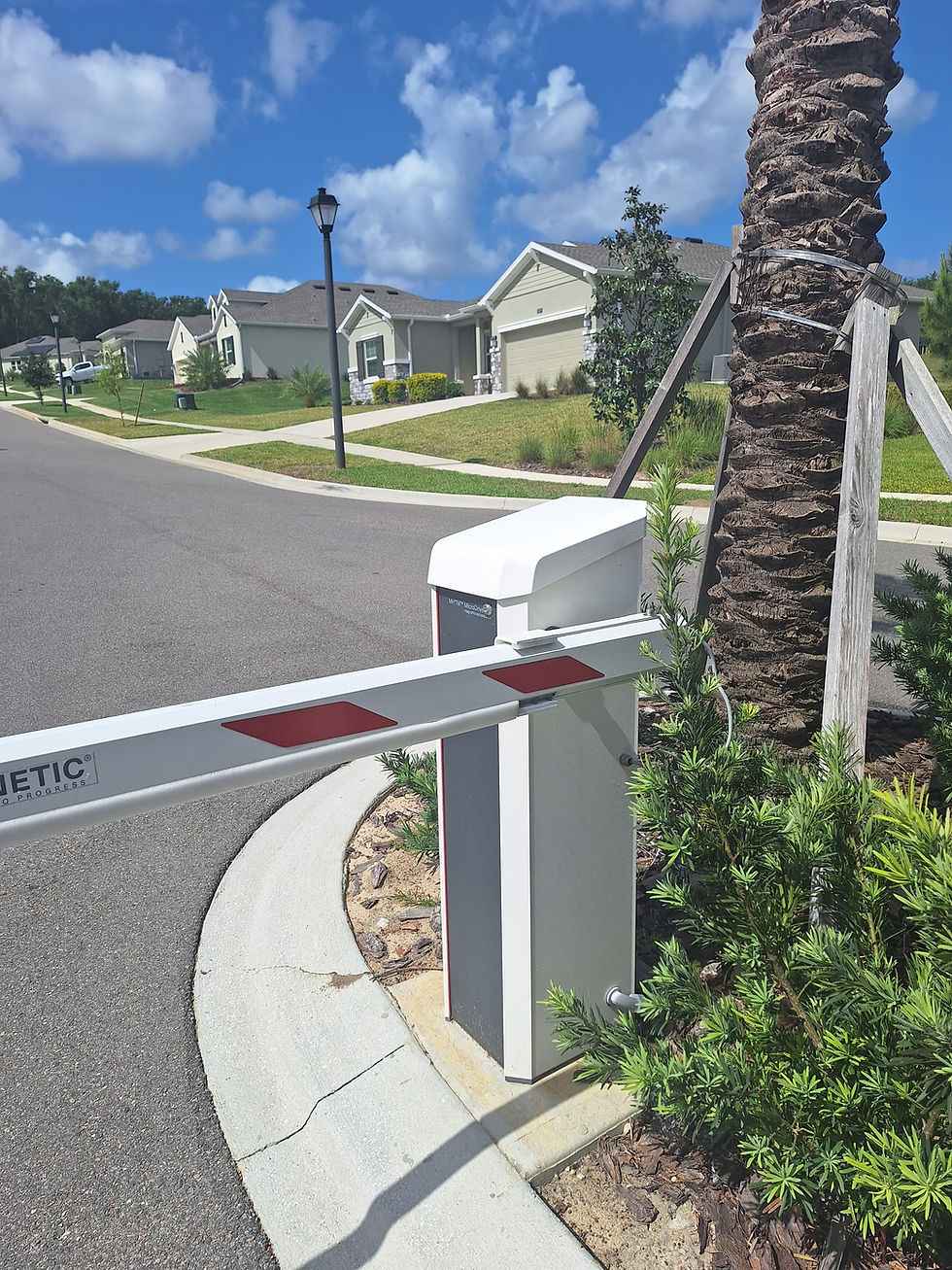
The reality is simple.
A barrier arm is not just a piece of equipment. It directly impacts:
Traffic flow
Resident experience
Visitor access
Overall perception of how the property is managed
When it works, no one notices it. When it fails, everyone notices it.
That is why knowing when to upgrade matters.
The Hidden Cost of Repeated Repairs
Many properties continue repairing older barrier arms because it feels like the cheaper option.
Replace a spring. Replace a board. Replace a sensor. Get it running again.
Then repeat.
On paper, this looks like maintenance. In reality, it becomes a pattern of short-term fixes that never fully solve the problem.
Over time, the costs add up:
Multiple service calls
Labor and trip charges
Ongoing downtime
Resident frustration
Management time spent coordinating repairs
At a certain point, you are no longer maintaining a system.
You are just keeping it alive.
When a Barrier Arm Becomes a Bottleneck
One of the biggest issues we see is outdated equipment trying to handle modern traffic.
Communities grow. Deliveries increase. Visitor traffic goes up. Access methods expand

(RFID, QR, LPR, etc.).
But the barrier arm stays the same.
The result:
Slower entry times
Vehicle stacking at the entrance
Increased complaints
Guards or staff stepping in to manage flow
Even if the arm is technically “working,” it may no longer be performing at the level the property needs.
How a Barrier Arm Upgrade Improves Traffic Flow
A properly selected barrier operator can immediately improve how an entry lane functions.
Modern systems provide:
Faster open and close cycles
More consistent operation under heavy use
Better handling of high vehicle volume
Smoother integration with access control
This is not just about speed.
It is about creating a predictable, controlled entry experience.
For residents, that means less waiting. For management, it means fewer complaints. For the property, it means a more professional and reliable system overall.
It’s Not Just the Arm — It’s the Entire Lane
When a barrier arm starts failing, the issue is not always isolated to the operator itself.
We often find problems with:
Loop detectors
Safety loops
Photo eyes or sensors
Wiring conditions
Control logic
Emergency access devices
Over time, multiple vendors may have worked on the system, creating a patchwork of changes with no clear structure.
A barrier arm upgrade is an opportunity to evaluate the entire lane and correct these underlying issues.
This is where real improvement happens.
Signs It’s Time to Upgrade Your Barrier Arm System
Not sure whether to repair or replace? Here are clear indicators that an upgrade may be the better option:
Frequent Service Calls
If the same issues keep coming back, repairs are no longer solving the problem.
Traffic Backup at Entry
If vehicles regularly stack at the gate, the system is not keeping up with demand.
Inconsistent Operation
If the arm hesitates, fails intermittently, or behaves unpredictably, reliability is already compromised.
Aging Equipment
Older systems often become harder to maintain and less compatible with newer technology.
Poor Integration
If the barrier arm does not work cleanly with access control, LPR, or other systems, it limits overall performance.
How to Evaluate Your Current System
If you are considering an upgrade, start with a simple evaluation:
Review Service History
Look at the last 12–24 months of repairs. Are issues repeating?
Observe Peak Traffic
Watch how the system performs during busy times. Is it smooth or backed up?

Assess System Age
Older systems typically require more frequent intervention.
Check Supporting Devices
Evaluate loops, sensors, and wiring, not just the operator.
Plan for Future Needs
Consider whether the system will need to support:
License plate recognition
Visitor management
Increased traffic volume
A good upgrade plan should account for both current issues and future use.
Repairing a barrier arm can make sense in the short term.

But if the goal is long-term reliability, the decision should be based on total value, not just immediate cost.
An upgrade can provide:
Reduced downtime
Fewer service calls
Improved traffic flow
Better system integration
A more reliable entry experience
In many cases, this makes the upgrade the more cost-effective option over time.
How Barrier Arms Fit Into a Larger Entry System

Barrier arms do not operate in isolation.
They are part of a larger system that may include:
Access control
License plate recognition
RFID or barcode entry
Visitor management
If one part of the system is outdated, it can limit the performance of everything else.
If you are considering upgrades, it is worth reviewing how your barrier arm works alongside:
Your Brivo access control system
Your Eagle Eye Networks video and LPR setup
Making sure these systems work together is what creates a reliable, modern entry solution.
Final Thoughts
Barrier arms are easy to overlook, but they play a critical role in how a property operates day to day.
If your system is:
Breaking down repeatedly
Slowing traffic
Causing complaints
Costing more in service than expected
It may be time to stop repairing and start evaluating a better solution.
The goal is not just to fix the gate.
The goal is to improve how the entire entry system functions.
Need Help Evaluating Your Entry System?
If you are dealing with recurring barrier arm issues, traffic backups, or unreliable gate performance, it may be worth taking a closer look at the system as a whole.
Identify root causes of entry issues
Improve system performance
Recommend practical upgrade paths
Whether the solution is repair or replacement, the focus is always on long-term reliability.


